
Short answer: Digital gold is better for investing, because it is 24-karat pure, carries no making charges, needs no storage, and can be sold instantly at live prices. Physical gold is better when you want something tangible to wear or gift, but it comes with making charges, purity concerns, storage risk, and resale deductions. For pure investment value, digital gold usually wins; for jewellery and occasions, physical gold has its place.
Indians have always bought gold. The question in 2026 is how. Here is a clear comparison.
The fundamental difference
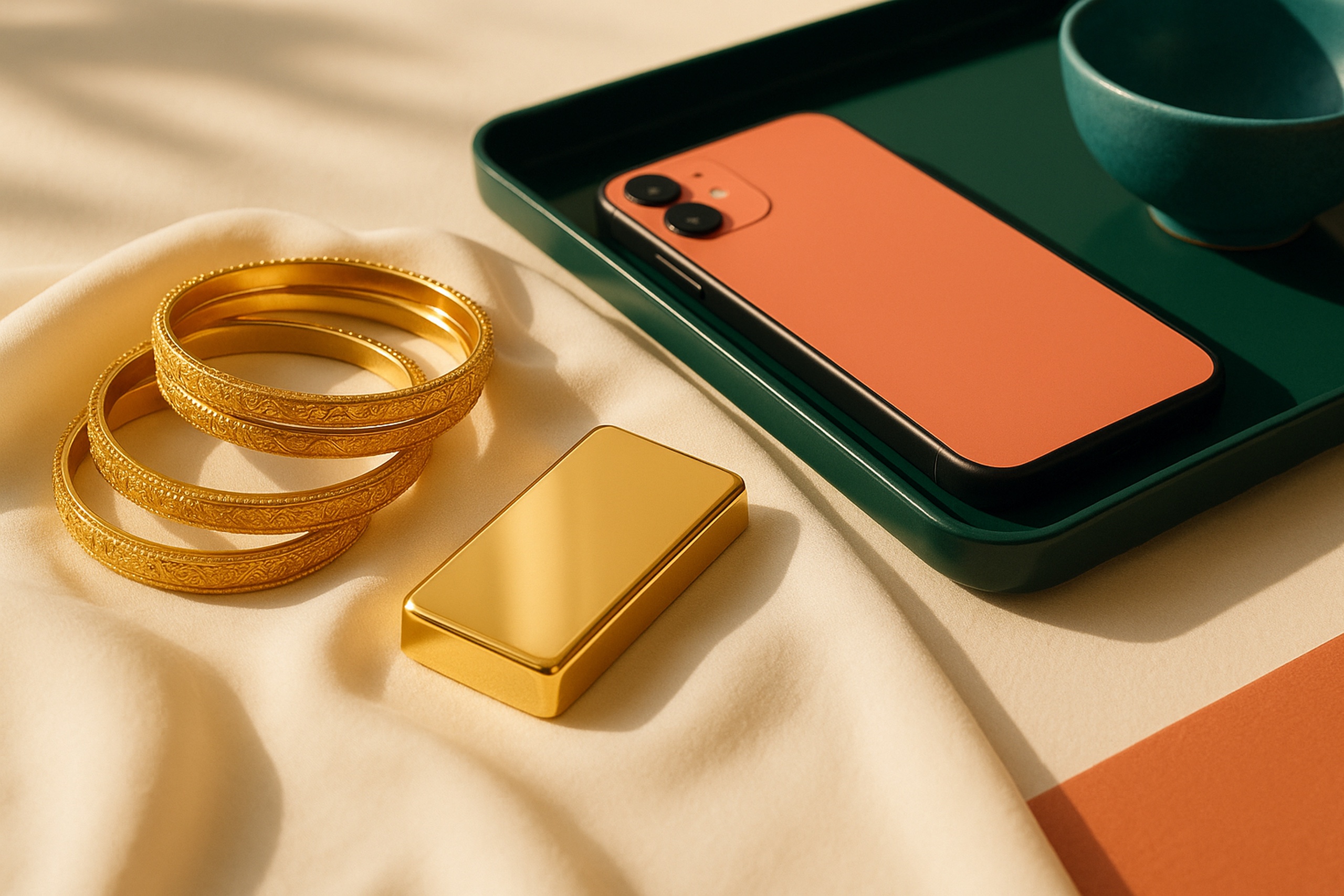
Physical gold is gold you hold: jewellery, coins, or bars. It is tangible, culturally significant, and giftable, but it comes with costs and practical hassles. Digital gold is 24-karat gold you buy online in any amount, stored in an insured vault on your behalf, that you can sell or convert to physical gold anytime. The difference really comes down to purpose: adornment and tradition versus pure investment.

Digital gold vs physical gold: side by side
| Feature | Digital Gold | Physical Gold |
|---|---|---|
| Purity | 24-karat, typically 99.9 percent | Varies; jewellery is often 22-karat |
| Making charges | None (until you take delivery) | High for jewellery (can be 8 to 25 percent or more) |
| Storage | Insured vault, free of worry | Your responsibility; locker cost or theft risk |
| Minimum amount | Very small (from 1 rupee) | Higher (cost of a coin or piece) |
| Resale | Instant, at live price | Deductions apply, especially on jewellery |
| GST on purchase | 3 percent | 3 percent (plus making charges) |
| Best for | Investing and accumulating | Wearing and gifting |
Where physical gold costs you
The appeal of physical gold is real: you can hold it, wear it, and pass it down. But as an investment, it carries drags on your returns:
- Making charges. Jewellery in particular carries significant making charges that you do not recover when you sell. This alone can eat a large chunk of your return.
- Purity concerns. You rely on hallmarking to confirm purity, and jewellery is often 22-karat rather than pure 24-karat.
- Storage and safety. You must store it securely, whether at home (theft risk) or in a bank locker (an ongoing cost).
- Resale friction. Selling jewellery often means accepting deductions, and buyers may pay less than the pure gold value.
Where digital gold shines
For putting money into gold, rather than wearing it, digital gold removes most of those drags:
- Pure and standardised. It is 24-karat, typically 99.9 percent, with no purity guesswork.
- No making charges. You pay for gold, not craftsmanship, so more of your money goes into the metal itself (until you choose physical delivery, which then adds making and delivery charges).
- No storage burden. It sits in an insured vault, so there is nothing to protect at home.
- Effortless liquidity. You can sell instantly at live prices, and buy in tiny amounts.
The trade-offs: a 3 percent GST and a buy-sell spread apply, and digital gold is not directly regulated by SEBI or the RBI, so choosing a reputable provider matters.
So which should you buy?
It depends on why you are buying:
- Buying gold as an investment? Digital gold is usually the better choice, thanks to purity, no making charges, and easy resale. You keep more of gold’s actual return.
- Buying to wear or to gift? Physical gold is the natural pick, and digital gold can even bridge the two, since you can accumulate digitally and take physical delivery later for an occasion.
A practical approach many people take is to invest through digital gold and buy physical gold only for jewellery and gifting, so each serves its real purpose without the other’s downsides.
Frequently asked questions
Is digital gold better than physical gold?
For investment, usually yes, because it is 24-karat pure, has no making charges, needs no storage, and sells instantly at live prices. For wearing or gifting, physical gold has its place.
Do I pay making charges on digital gold?
No, not while it is stored digitally. Making charges only apply if you convert it into physical coins or bars and take delivery.
Is digital gold real gold?
Yes. Each purchase is backed by an equivalent amount of physical 24-karat gold, stored in an insured vault on your behalf.
Can I convert digital gold into physical gold?
Yes. You can request delivery as coins or bars, with making and delivery charges applying at that point.
Which is safer to store, digital or physical gold?
Digital gold removes home-storage and theft risk, since it is held in an insured vault. Physical gold needs secure storage, often at the cost of a bank locker.
Start small on Jupiter: you can buy Digital Gold in small amounts directly from the app. New to it? Read our explainers on what digital gold is and whether it is a good investment.
Invest in gold, minus the hassle
If your goal is to invest in gold rather than wear it, digital gold gives you purity and convenience without making charges or storage worries. With Jupiter, you can buy and sell Digital Gold in small amounts right from the app and build your holding gram by gram. Jupiter is the 1-app for everything money.
Digital gold is not currently regulated by SEBI or the RBI. Prices, spreads, making charges, GST, and tax rules vary and are subject to change. This article is general information, not investment advice. Consult a SEBI-registered adviser for guidance specific to your situation.
Related reading
- What Is Digital Gold? A Beginner's Guide to Buying Gold Online in India
- How to Convert Digital Gold into Physical Gold: A Step-by-Step Guide
- Is Digital Gold Safe? How It's Stored, Insured, and Regulated
- Digital Gold vs Sovereign Gold Bonds vs Gold ETFs: The Best Way to Buy Gold in India
- Is Digital Gold a Good Investment? Pros, Cons, and Who It's For
- Personal Loan vs Gold Loan: Which Should You Choose?