

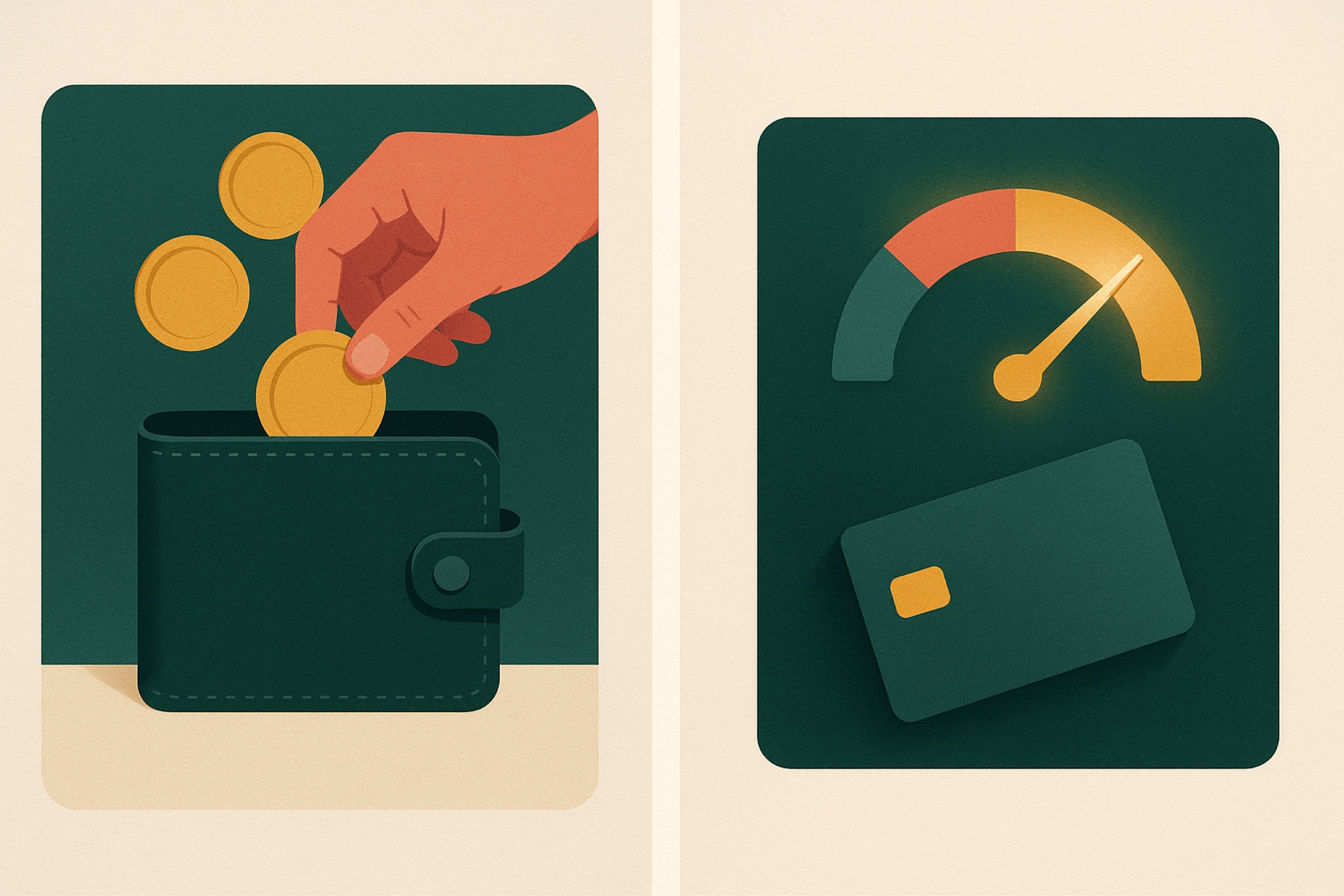
Short answer: A debit card spends your own money straight from your bank account, so there is no borrowing and no interest. A credit card lets you spend on a bank’s credit limit, which you repay later, and it builds your credit history and usually earns better rewards. Use a debit card to stay strictly within your budget and withdraw cash, and use a credit card for building credit, earning rewards, and safer online spending, as long as you pay the bill in full.
Both cards can sit in the same wallet and do very different jobs. Here is how to use each one well.
The core difference
The distinction is simple: a debit card is linked to your bank account and spends money you already have. A credit card is linked to a credit limit set by a bank and spends borrowed money that you repay by a due date. That single difference, your money versus borrowed money, drives everything else.
Debit card vs credit card: side by side
| Feature | Debit Card | Credit Card |
|---|---|---|
| Whose money | Your own, from your account | The bank’s credit limit |
| Interest | None | None if paid in full; high if you carry a balance |
| Builds credit score | No | Yes |
| Rewards | Usually modest | Usually stronger cashback and rewards |
| Cash withdrawal | Yes, at ATMs | Possible but expensive; avoid |
| Overspending risk | Low, capped at your balance | Higher, needs discipline |
| Links to UPI | Yes | Yes, on RuPay cards |
When to use a debit card
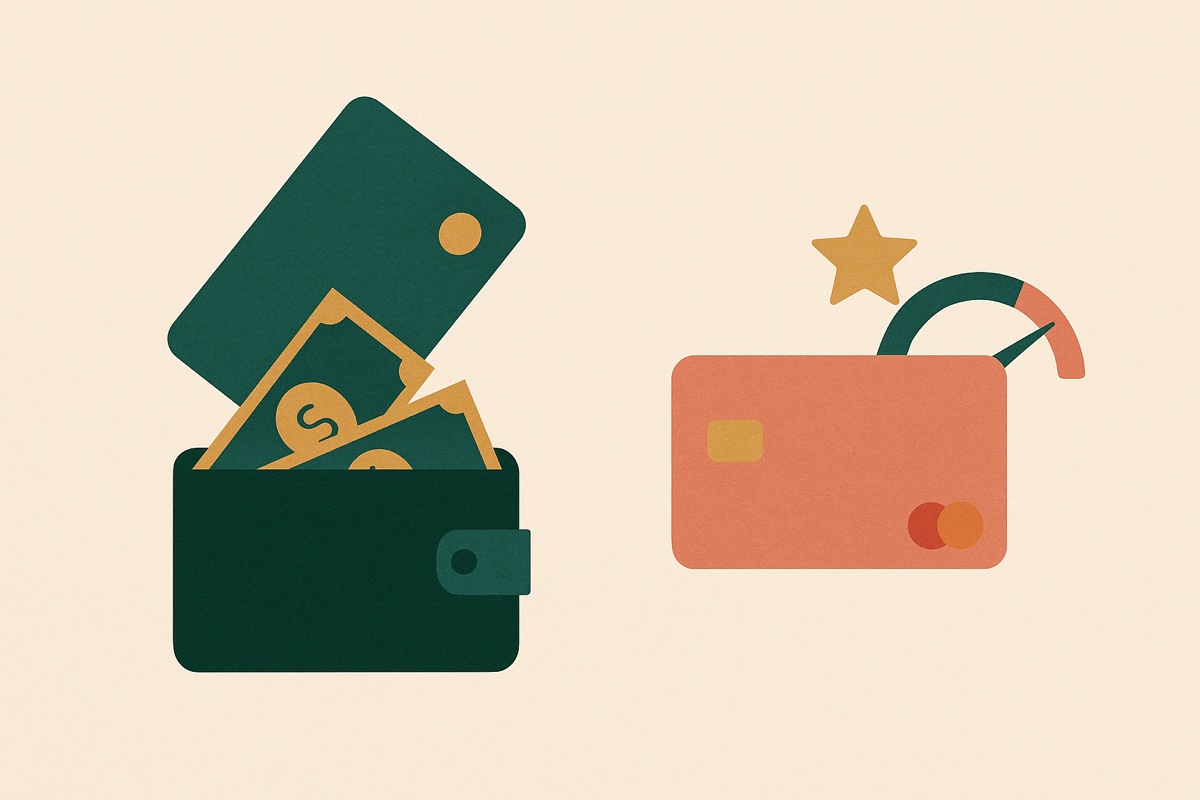
A debit card is your everyday, stay-within-means tool. Reach for it when:
- You want to spend only what you have. Since it draws from your balance, it is impossible to overspend beyond your account, which makes budgeting easier.
- You need cash. Debit cards are the standard way to withdraw money at ATMs, usually without a fee at your own bank.
- You are avoiding any temptation to borrow. No credit line means no chance of a revolving balance.
The trade-offs are fewer rewards and, importantly, that debit spending does not build your credit history.
When to use a credit card
A credit card is your build-and-benefit tool, powerful when used with discipline. Reach for it when:
- You want to build a credit score. Responsible credit card use is one of the simplest ways to build the credit history you will need for future loans. Debit cards do nothing for your score.
- You want rewards. Credit cards typically offer stronger cashback and rewards on the spending you would do anyway.
- You are shopping online or travelling. A credit card adds a layer of protection, because the money at risk is the bank’s first, not yours, and disputes are handled without your own balance being drained in the meantime.
- You want a short, interest-free credit window. Pay in full by the due date and you get free short-term credit, plus the option to convert big purchases to EMIs.
The one rule that makes a credit card safe: pay your full statement balance every month. Do that, and you get all the benefits with none of the interest.
Does a debit card build your credit score?
No. This is one of the most common misconceptions. Because a debit card spends your own money, there is no borrowing to report, so it has no effect on your credit score. Only credit products, like a credit card or a loan, build your credit history. If building credit matters to you, a credit card used responsibly is the tool for the job.
What about safety?
Both cards carry strong protections in India. Under RBI rules, if you report an unauthorised transaction promptly and it was not due to your negligence, your liability can be zero. The practical edge of a credit card is that fraudulent spends happen on the bank’s money first, so your own bank balance is not sitting empty while a dispute is resolved. With either card, never share your OTP, PIN, or CVV, and enable transaction alerts.
The smart approach: use both
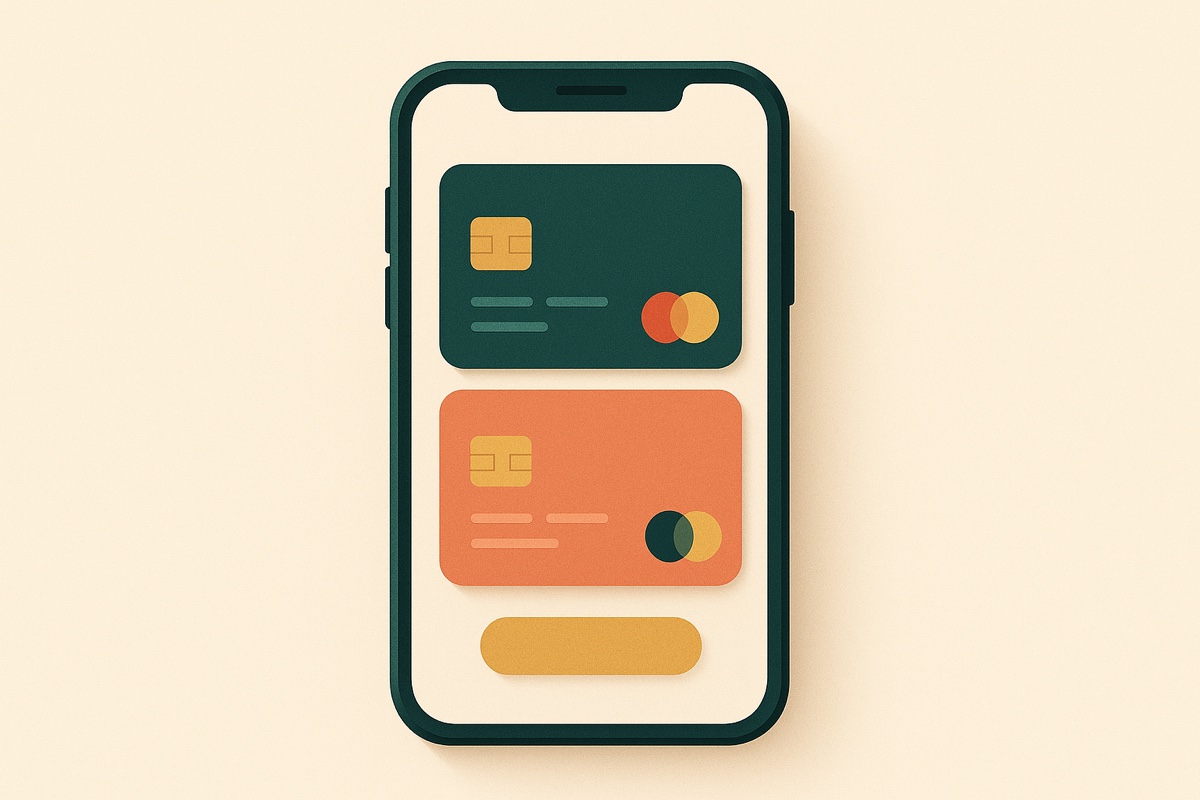
You do not have to choose. The most effective setup for many people is:
- Debit card for cash withdrawals and any spending where you want a hard limit tied to your balance.
- Credit card for online purchases, rewards, and building your credit score, paid in full every month.
With Jupiter, you get both in one app: a debit card with your zero-balance savings account (powered by Federal Bank), and the lifetime-free Edge+ RuPay Credit Card to build credit and earn cashback. Both can be linked to UPI, and you manage everything, spends, limits, and payments, from one place.
Frequently asked questions
What is the main difference between a debit and credit card?
A debit card spends your own money from your bank account, while a credit card spends a bank’s credit that you repay later. A credit card can build your credit score; a debit card cannot.
Which is safer, a debit or credit card?
Both have strong protections under RBI rules. A credit card offers a practical edge for online and travel spending, because fraud hits the bank’s money first rather than your own balance.
Does using a debit card improve my credit score?
No. A debit card involves no borrowing, so it does not affect your credit score. Only credit products like credit cards and loans build credit history.
Should I use a credit card or debit card for online shopping?
A credit card is generally preferable online, for stronger dispute protection and rewards, provided you pay your bill in full. Never save card details unnecessarily; use tokenisation where offered.
Can both cards be used on UPI?
Yes. Debit cards link to UPI, and RuPay credit cards can also be linked to UPI, letting you scan and pay using your credit limit.
One app, both cards
The point is not debit versus credit, it is using each for what it does best. With Jupiter, the 1-app for everything money, you can hold a debit card and a RuPay credit card together, track every spend in real time, and pay your credit bill in a tap. Download the Jupiter app to get started.
*Card features, rewards, and protections vary by issuer and are subject to change. Amica Financial Technologies Private Limited (Jupiter) is not a bank; savings accounts are offered through Federal Bank and co-branded cards through CSB Bank. This article is general information, not financial advice.*
Related reading
- What Is a Credit Score (CIBIL Score) and How Is It Calculated?
- Credit Card Charges Explained: Every Fee You Should Know Before You Apply
- How to Get Your First Credit Card in India — Even With No Credit History
- What Happens If You Don't Pay Your Credit Card Bill on Time?