

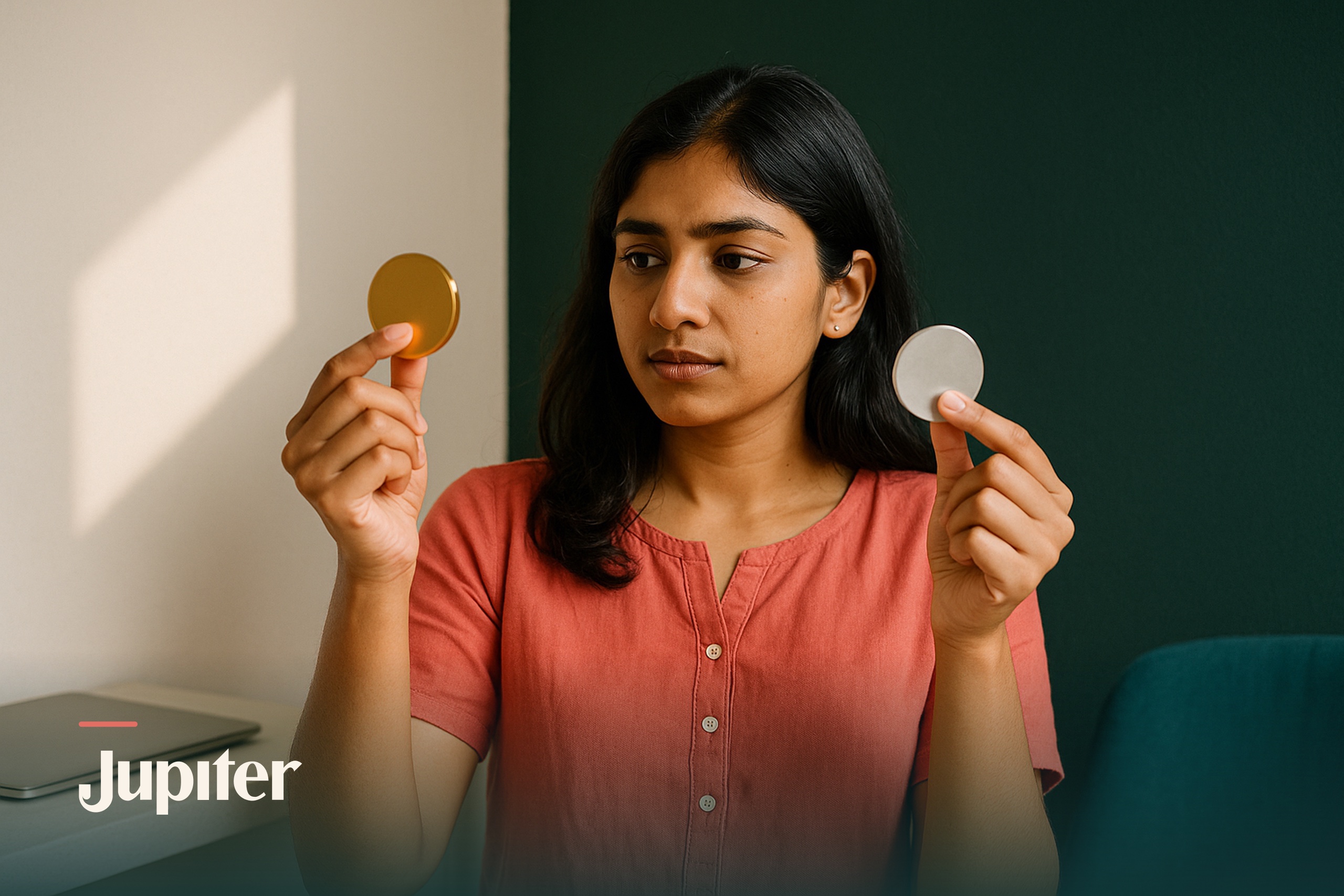
Short answer: Gold is the more stable precious metal, prized for wealth preservation, lower volatility, and its role as a safe haven. Silver is cheaper, more volatile, and driven heavily by industrial demand (solar, EVs, electronics), giving it higher growth potential but sharper swings. For stability, choose gold; for higher-risk, higher-upside exposure, add silver. Many investors hold both, with gold as the larger anchor.
Both are precious metals, but they behave quite differently as investments. Here is how to choose.
The fundamental difference
The key distinction is what drives each metal:
- Gold is mainly an investment and store-of-value asset. The vast majority of its demand comes from investment, central banks, and jewellery, so it behaves as a stable, safe-haven hedge.
- Silver is a hybrid. Roughly half its demand is industrial, used in solar panels, electric vehicles, electronics, and more, and the other half is investment and jewellery. This dual role makes silver more tied to the economic cycle and more volatile.
So gold leans stable and defensive, while silver is more dynamic and cyclical.
Gold vs silver: side by side

| Feature | Gold | Silver |
|---|---|---|
| Primary demand | Investment, central banks, jewellery | About half industrial, half investment |
| Volatility | Lower, steadier | Much higher (often 2x gold’s swings) |
| Price per gram | High | Much lower (more affordable) |
| Role | Wealth preservation, safe haven | Growth potential, industrial play |
| Best for | Stability-focused investors | Higher-risk, higher-reward investors |
| Liquidity | Very high | High, but less deep than gold |
The case for gold
Gold is the anchor of a precious-metals allocation. Its strengths:
- Stability and lower volatility. Gold moves more gently than silver, making it a smoother hedge.
- Safe-haven status. In crises and downturns, investors flock to gold, supporting its value.
- High liquidity. Gold has one of the deepest, most trusted markets in the world.
- Wealth preservation. Over the long term, gold has reliably held purchasing power.
The trade-off is more modest upside in a boom compared to silver.
The case for silver
Silver offers more growth potential, with more risk:
- Higher upside in bull markets. Silver’s percentage gains can outpace gold’s during strong rallies.
- Industrial demand tailwinds. Growth in solar, EVs, and electronics adds structural demand beyond pure investment.
- Affordability. Silver is far cheaper per unit, making it easy to start small.
The trade-off is much higher volatility. Silver’s price can swing sharply, with deeper corrections, so it demands a stronger stomach and a longer horizon.
The gold-silver ratio
Investors often watch the gold-silver ratio, how many units of silver it takes to buy one unit of gold. A high ratio can suggest silver is relatively cheap versus gold, and a low ratio the opposite. It is a useful context tool, though it should not be the only factor in your decision.
Which should you choose?

- Choose gold if you want stability, a reliable long-term store of value, and a smoother hedge. It suits most investors as the core precious-metals holding.
- Choose silver if you can tolerate higher volatility for greater upside potential, and want exposure to its industrial-demand growth story, ideally over a longer horizon.
- Consider both. Many investors hold gold as the larger, stabilising anchor and add a smaller silver allocation for growth. Together they diversify your precious-metals exposure.
Whatever you choose, keep precious metals as a modest part of a diversified portfolio (commonly 5 to 15 percent overall), not a replacement for equity and debt.
Frequently asked questions
Is gold or silver a better investment?
Gold is better for stability and wealth preservation, with lower volatility. Silver offers higher growth potential, driven by industrial demand, but with much greater volatility. Many investors hold both.
Why is silver more volatile than gold?
Because about half of silver’s demand is industrial (solar, EVs, electronics), its price is tied to the economic cycle and can swing sharply. Gold, driven mainly by investment demand, is steadier.
Is silver cheaper than gold?
Yes, silver is far cheaper per unit than gold, making it more accessible for investors starting small. But it also carries higher volatility.
What is the gold-silver ratio?
It is the number of units of silver needed to buy one unit of gold. Investors use it to gauge the relative value of the two metals, though it is just one factor among many.
Should I hold both gold and silver?
Many investors do, holding gold as the larger, stabilising anchor and a smaller silver allocation for growth. Together they diversify precious-metals exposure, kept modest within the overall portfolio.
With Jupiter: buy Digital Gold in small amounts, no making charges. Related reading: 24K vs 22K gold and gold ETF vs gold mutual fund.
Start with gold, the easy way
If you want a stable precious-metals anchor, gold is the natural starting point, and digital gold makes it effortless. With Jupiter, you can buy pure Digital Gold in small amounts right from the app and build your holding gradually. Jupiter is the 1-app for everything money.
Digital gold is not currently regulated by SEBI or the RBI. Gold and silver prices can rise or fall, and past performance is not indicative of future results. This article is general information, not investment advice. Consult a SEBI-registered adviser for guidance specific to your situation.
Related reading
- What Is Digital Gold? A Beginner's Guide to Buying Gold Online in India
- Is Digital Gold Safe? How It's Stored, Insured, and Regulated
- Digital Gold vs Sovereign Gold Bonds vs Gold ETFs: The Best Way to Buy Gold in India
- Is Digital Gold a Good Investment? Pros, Cons, and Who It's For
- Digital Gold vs Physical Gold: Which Should You Buy?
- How Is Gold Taxed in India? A Complete Guide