

Short answer: Your EMI (Equated Monthly Instalment) depends on three things — the loan amount (P), the interest rate (R), and the tenure (N). Lenders use the standard formula EMI = [P × R × (1+R)^N] ÷ [(1+R)^N − 1]. You can reduce your EMI by borrowing less, choosing a longer tenure, securing a lower rate (a better credit score helps most), prepaying, or transferring the balance to a cheaper lender.
Here’s how it all fits together.
Planning a home loan instead? A home loan EMI calculator works the same way — enter the amount, rate, and tenure to see your monthly instalment.
What exactly is an EMI?
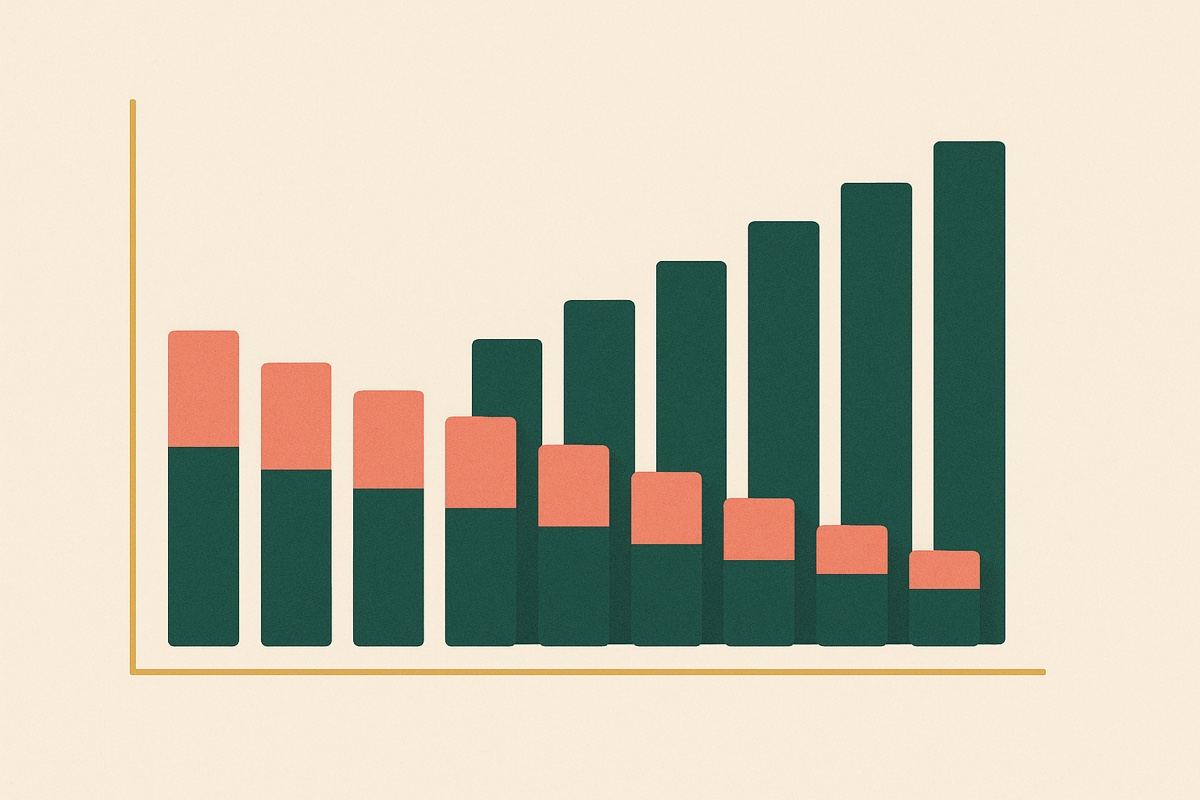
An EMI is the fixed amount you pay your lender every month until the loan is fully repaid. Each EMI has two parts: a portion that goes toward the interest and a portion that reduces the principal (the amount you borrowed).
In the early months, more of your EMI goes toward interest; as the outstanding principal shrinks, more goes toward principal. This is called amortisation — and it’s why prepaying early saves the most (more on that below).
The three ingredients of your EMI
| Factor | What it is | Effect on EMI |
|---|---|---|
| Principal (P) | The amount you borrow | Higher principal → higher EMI |
| Interest rate (R) | The monthly rate charged | Higher rate → higher EMI |
| Tenure (N) | Number of monthly instalments | Longer tenure → lower EMI, but more total interest |
The EMI formula, explained simply
Lenders calculate EMI using this standard formula:
EMI = [P × R × (1+R)^N] ÷ [(1+R)^N − 1]
Where:
- P = principal (loan amount)
- R = monthly interest rate = (annual rate ÷ 12 ÷ 100)
- N = tenure in months
A quick illustration: borrow ₹1,00,000 at 12% per year for 12 months. The monthly rate (R) is 0.01. Plugging into the formula gives an EMI of roughly ₹8,885, meaning you’d repay about ₹1,06,619 in total — around ₹6,619 in interest. (This is illustrative; your actual figures depend on your rate and tenure. Any lender’s EMI calculator will do the maths for you instantly.)
Reducing balance vs flat rate — don’t get caught out
How the rate is applied matters as much as the rate itself:
- Reducing balance: interest is charged only on the *outstanding* principal, which falls every month. Most personal loans in India work this way.
- Flat rate: interest is charged on the *original* amount for the whole tenure. A “flat” rate looks lower but is effectively far higher — a flat rate can work out to nearly double the equivalent reducing-balance rate.
Always compare loans on a reducing-balance basis so you’re comparing like with like.
5 practical ways to reduce your EMI (or total interest)
1. Improve your credit score before you apply
Your interest rate is driven heavily by your credit score. A strong score (750+) can meaningfully lower your rate — and even a small rate reduction saves a lot over the full tenure. This is the single most powerful lever, and it’s worth spending a few months on before borrowing.
2. Choose a longer tenure — carefully
A longer tenure spreads repayment over more months, which lowers each EMI. The catch: you pay more total interest over the life of the loan. Use this only if you genuinely need monthly cash-flow relief — and prepay when you can.
3. Borrow only what you need
It sounds obvious, but a smaller principal means a smaller EMI and less interest. Just because you’re approved for ₹5 lakh doesn’t mean you should take all of it.
4. Make prepayments — especially early
Prepaying (paying an extra lump sum toward your principal) reduces the outstanding balance, so less interest accrues afterward. You can usually choose to either lower your EMI or shorten your tenure — and shortening the tenure saves more interest overall (unless you need the lower EMI for cash flow). Prepaying in the first couple of years saves the most, because that’s when your interest portion is highest.
5. Consider a balance transfer
If another lender offers a materially lower rate, transferring your outstanding loan can reduce your EMI and total interest. Do a cost-benefit check first: your interest savings should comfortably exceed any processing or transfer fees.
A quick note on prepayment charges
Prepayment can carry a fee, so check before you pay:
- Fixed-rate personal loans (the most common type) may attract a foreclosure/prepayment charge, often in the region of 2%–5% plus GST — though many lenders waive it after a set number of EMIs.
- For floating-rate loans, RBI rules effective from January 2026 generally remove prepayment/foreclosure charges for individual borrowers. Since most personal loans are fixed-rate, confirm which type yours is.
Frequently asked questions
How is a personal loan EMI calculated? Using the formula EMI = [P × R × (1+R)^N] ÷ [(1+R)^N − 1], where P is the loan amount, R is the monthly interest rate, and N is the tenure in months.
Does a longer tenure reduce my EMI? Yes — a longer tenure lowers your monthly EMI, but you pay more total interest over the life of the loan.
What’s the fastest way to lower my EMI? Securing a lower interest rate has the biggest impact, and a strong credit score is the main way to get one. Borrowing less and prepaying also help.
Should I reduce my tenure or my EMI when I prepay? Reducing the tenure saves more total interest. Choose EMI reduction only if you need lower monthly outgo for cash-flow reasons.
Is it better to prepay early or late in the loan? Early. Because interest makes up a larger share of your EMI in the initial period, prepaying early cuts more of your total interest cost.
Know your numbers before you borrow
Understanding how your EMI is built puts you in control — you can size the loan, tenure, and rate to fit your budget rather than the other way round. When you’re ready, you can check your eligibility for an instant personal loan in the Jupiter app and see your amount, tenure, and EMI upfront before committing to anything.
*Figures in this article are illustrative. Actual EMIs, interest rates, and prepayment terms vary by lender and borrower profile and are subject to change. Loans on Jupiter are facilitated in partnership with RBI-registered NBFCs. This is general information, not financial advice. Please borrow responsibly.*
Related reading
- Personal Loan vs Credit Card: Which Is Cheaper to Borrow From?
- What Can You Use a Personal Loan For? Smart Uses (and Ones to Avoid) — 2026
- Documents Required for a Personal Loan in India (and How to Get Approved Faster) — 2026
- Should You Prepay Your Personal Loan? Foreclosure and Part-Payment Explained