


Short answer: When buying gold jewellery, always check for the BIS hallmark and HUID (mandatory on all gold jewellery since April 2023), and get an itemised invoice showing the gold value, making charges, and GST separately. Making charges vary widely and are not recoverable at resale, so compare them across jewellers. Focus on the total invoice value, not just the displayed gold rate.
Gold jewellery is beautiful, but it is easy to overpay if you do not know what to check. Here is how to buy smart.
Understand the total cost, not just the gold rate
The price you pay for gold jewellery is more than the gold rate. It is made up of:
- The gold value (weight times the rate, based on purity).
- Making charges (the cost of crafting the piece).
- GST (3 percent on the gold value, plus GST on making charges).
- Any stone or wastage charges, for studded pieces.
Two jewellers can quote the same gold rate but very different making charges, so the final invoice value is what matters, not the displayed rate.
Making charges: the biggest variable
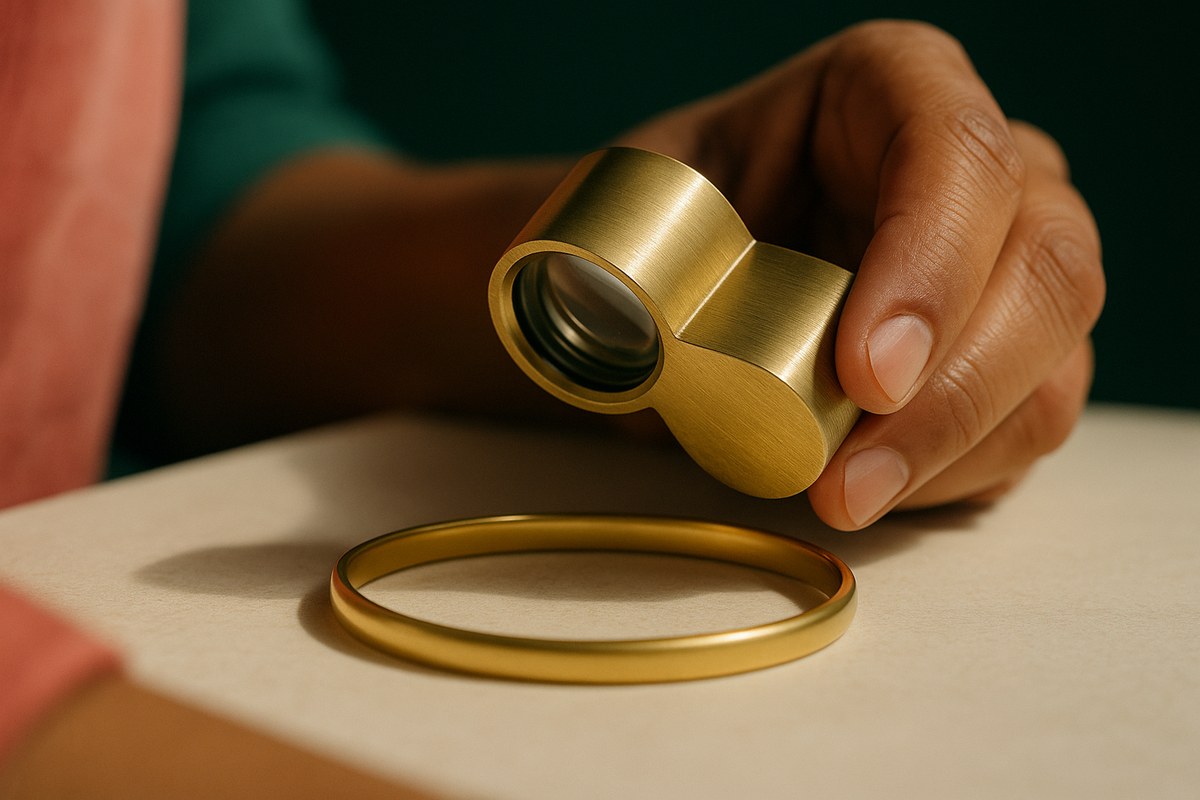
Making charges are the cost of turning gold into jewellery, and they vary widely, by design complexity, jeweller, and brand. They can be charged as a percentage of the gold value or a fixed amount per gram, and for intricate designs they can be substantial.
Crucially, making charges are usually not recovered when you sell or exchange the jewellery. So they are effectively a cost that reduces the investment value of jewellery. To avoid overpaying:
- Ask for the making-charge percentage upfront, before you commit.
- Compare it across a couple of jewellers for similar designs.
- Prefer simpler designs if investment value matters more than intricacy, since they carry lower making charges.
Hallmarking and HUID: your purity guarantee
This is non-negotiable. BIS hallmarking is mandatory on gold jewellery, and since April 2023, every piece must carry a 6-digit HUID (Hallmark Unique Identification) number. The hallmark assures you the gold is genuinely the purity claimed, protecting you from being sold impure gold.
On a hallmarked piece, look for:
- The BIS logo.
- The purity/fineness mark (999 for 24K, 916 for 22K, 750 for 18K).
- The 6-digit HUID.
You can verify the HUID in seconds using the free BIS CARE app, which confirms the jeweller, purity, and hallmarking details. If the HUID cannot be verified, do not buy the piece.
Understand the GST
Gold attracts a special GST rate. Broadly, 3 percent GST applies on the gold value, plus GST on the making charges. Watch out for double or opaque GST billing, your invoice should show the gold value, making charges, and GST separately, not bundled into one unclear total. This transparency lets you check you are being charged correctly.
Your pre-purchase checklist

Before you pay, confirm:
- BIS hallmark and HUID are present and verifiable.
- Itemised invoice, with gold value, making charges, and GST shown separately.
- The jeweller’s GSTIN is on the invoice.
- Purity matches the rate you are being billed at.
- The gold rate matches the market, compare against a published rate.
- Buyback or exchange policy is confirmed in writing.
A clean, transparent bill matters more than a rushed “good deal.”
A note on jewellery vs investment
Remember that jewellery is best thought of as something to wear and enjoy, not primarily as an investment. Making charges, GST, and resale deductions all reduce its investment value. If your goal is to invest in gold rather than wear it, purer, lower-cost forms like digital gold or gold ETFs are more efficient, since they carry no making charges. Many people buy jewellery for occasions and invest in gold separately.
Frequently asked questions
What should I check when buying gold jewellery?
Check for the BIS hallmark and HUID, get an itemised invoice (gold value, making charges, and GST shown separately), confirm the jeweller’s GSTIN, ensure the purity matches the rate, and confirm the buyback policy.
What are making charges on gold?
Making charges are the cost of crafting gold into jewellery. They vary widely by design and jeweller, and are usually not recovered at resale, so compare them before buying.
Is hallmarking mandatory on gold jewellery?
Yes. BIS hallmarking is mandatory on gold jewellery, and since April 2023 every piece must carry a 6-digit HUID, which you can verify on the free BIS CARE app.
How much GST is charged on gold jewellery?
Broadly, 3 percent GST applies on the gold value, plus GST on the making charges. Your invoice should show the gold value, making charges, and GST separately.
Is gold jewellery a good investment?
Jewellery is best for wearing rather than investing, since making charges, GST, and resale deductions reduce its investment value. For investing in gold, purer, lower-cost forms like digital gold or gold ETFs are more efficient.
With Jupiter: buy Digital Gold in small amounts, no making charges. Related reading: 24K vs 22K gold and gold ETF vs gold mutual fund.
Invest in gold without the making charges
If your goal is to invest in gold rather than wear it, you can skip making charges entirely. With Jupiter, you can buy pure Digital Gold in small amounts right from the app, no making charges, no storage worries. Jupiter is the 1-app for everything money.
Digital gold is not currently regulated by SEBI or the RBI. Gold prices, making charges, GST, and hallmarking rules are subject to change. This article is general information, not investment advice. Consult a qualified professional for guidance specific to your situation.
Related reading
- What Is Digital Gold? A Beginner's Guide to Buying Gold Online in India
- Is Digital Gold Safe? How It's Stored, Insured, and Regulated
- Digital Gold vs Sovereign Gold Bonds vs Gold ETFs: The Best Way to Buy Gold in India
- Is Digital Gold a Good Investment? Pros, Cons, and Who It's For
- Digital Gold vs Physical Gold: Which Should You Buy?
- Gold vs Silver: Which Should You Invest In?